eCommerce SEO

eCommerce SEO that grows non-brand revenue from category and product pages

eCommerce SEO helps an online store rank its category and product pages for the searches shoppers make before they choose a brand. We fix crawl and duplicate content problems, improve category pages that deserve to rank and add structured product data that search engines and AI shopping tools can read. The work applies to Shopify, WooCommerce, BigCommerce, Magento and custom platforms.

eCommerce SEO helps your store rank its category and product pages for the searches shoppers make before they pick a brand. Most stores share three problems: duplicate filter pages, categories with no useful copy and product data search engines cannot read. We fix those first, because they limit everything else.

Why it matters
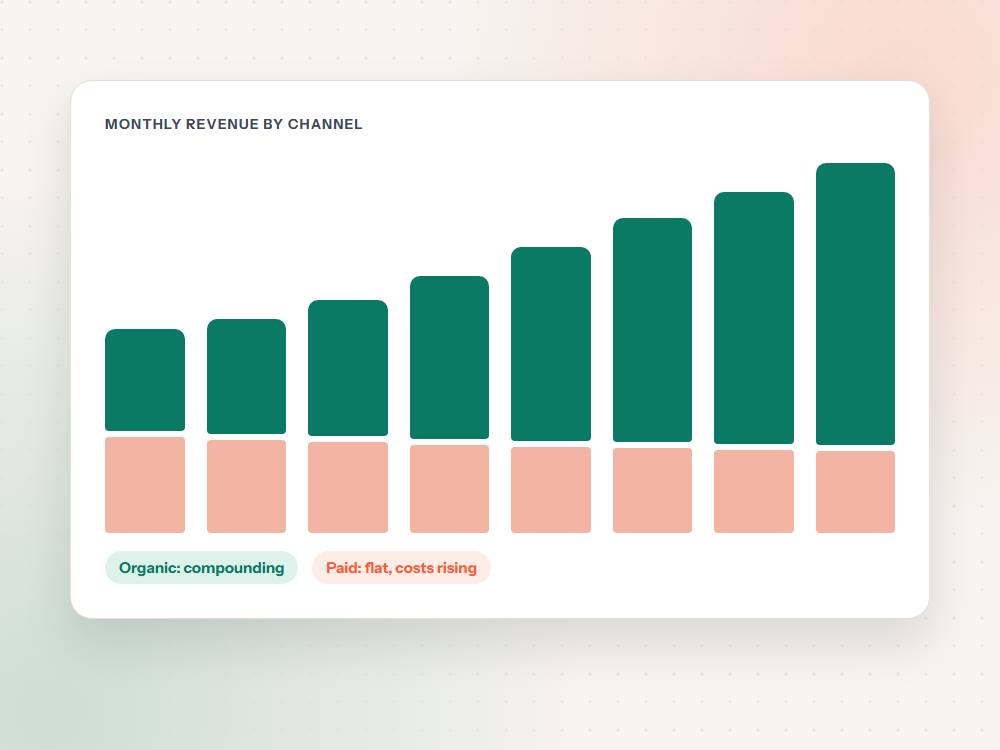
Paid shopping ads get more expensive. Organic traffic can keep working.

Illustration explaining why this SEO service matters

Many stores rely on paid ads until the margins stop working. Organic search keeps sending visitors after the spend stops, and a category page that ranks well can outsell a modest ad budget for years. The strongest stores treat paid and organic search as one channel mix.

Platforms create URLs faster than most teams can manage them. Filters, sort orders, variants, tag pages and internal search results can all become crawlable pages, and many are close copies of each other. Search engines spend their time on those while the categories that matter go stale.

Shopping journeys now start in AI assistants too. When someone asks an assistant for the best carry-on under a set budget, the answer draws on product data, reviews and editorial comparisons. Stores with complete structured data and genuine third-party reviews are more likely to be named.

Our view: copied manufacturer descriptions are one of the most common reasons a store cannot outrank the brand it resells.

What is included

What our ecommerce SEO service covers

We prioritize by revenue, so categories with real search demand and healthy margins come first.

Crawl and index control

Rules for faceted navigation, parameters, variants and pagination, so search engines crawl the pages that sell and skip the ones that do not.

Category page optimization

Titles, headings, buying guidance, FAQs and internal links for the categories that match how shoppers search.

Product page content

Unique descriptions for top sellers, clear specification tables, sizing notes and answers to the questions support teams hear most often.

Product structured data

Product, Offer, AggregateRating, shipping and return policy markup that matches what shoppers see on the page.

Site architecture

Category hierarchy, breadcrumbs and internal links that move authority toward pages with commercial intent.

Our process

How we grow organic revenue for stores

Step 1

Revenue-weighted keyword map

We match search demand to your categories and weight it by margin and stock depth, so effort goes where the profit is.

Step 2

Technical cleanup

Duplicate URLs, index bloat, broken canonicals and slow templates get fixed first, because they limit every other improvement.

Step 3

Category and product rollout

We improve categories in batches, measure the results and extend what works across the catalog.

Step 4

Report in revenue

Monthly reports show organic revenue and orders by category, with notes on seasonality and stock changes.

From the field

What holds many online stores back

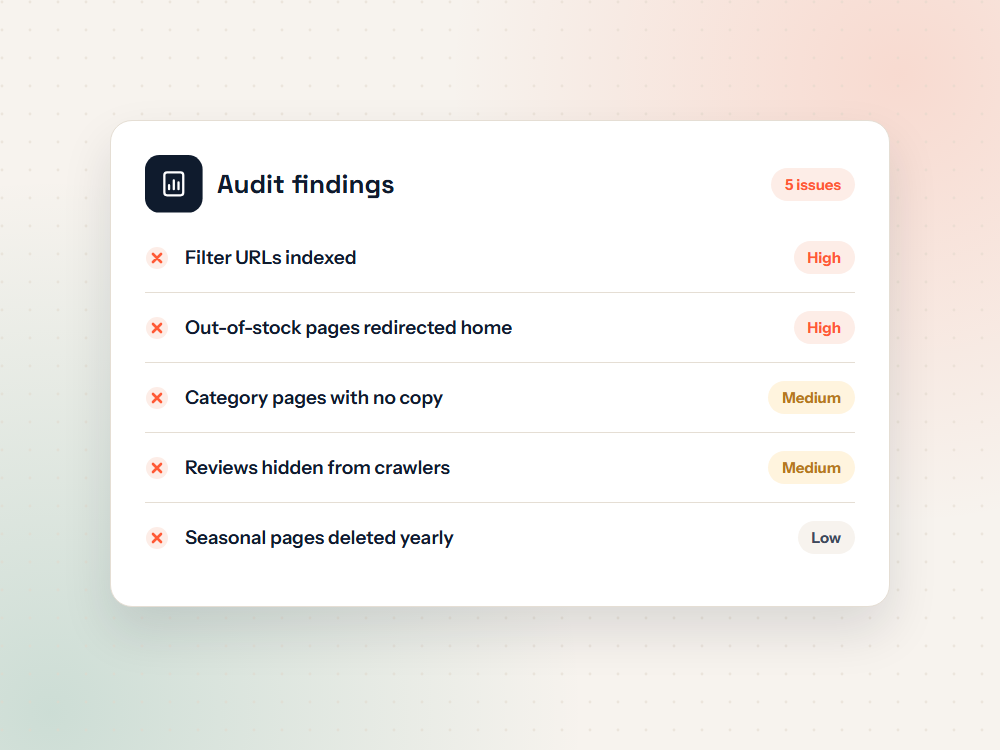
Illustration of common SEO audit findings

These issues appear often in ecommerce audits:

  • Thousands of filter combinations indexed as thin copies of the main category.
  • Out-of-stock products returning errors or redirecting to the homepage, which discards the links they earned.
  • Category pages with a product grid and no supporting text, so search engines struggle to tell them apart.
  • Reviews loaded by a third-party script that crawlers may not see.
  • Seasonal pages deleted each year and rebuilt from scratch.

Fixing these rarely requires a replatform. Most of the work happens in templates, settings and content.

FAQ

eCommerce SEO questions

Which page type matters most for ecommerce SEO?

For most stores, category pages. They target broad searches and collect internal links across the site. Product pages matter for specific model searches, but categories usually carry the bulk of organic revenue.

Should I noindex filtered and faceted pages?

Not all of them. A filter that matches a real search, such as a color or brand within a category, can be a useful landing page. The rest should be blocked from crawling or canonicalized to the main category. We decide filter by filter, based on search demand.

What should I do with discontinued products?

If a product is temporarily out of stock, keep its page live with clear availability and alternatives. For permanently discontinued products, redirect to the closest replacement or category. Return a 404 or 410 only when nothing relevant remains.

How long does ecommerce SEO take to work?

Technical cleanup often improves indexing within a few months. Category growth in competitive niches usually takes longer, because it depends on content quality and links built over time.

Do you work with Shopify and WooCommerce?

Yes, along with BigCommerce, Magento, Salesforce Commerce Cloud and headless builds. We also offer a dedicated Shopify SEO service for platform-specific issues.

How do AI shopping assistants choose which products to mention?

They draw on product feeds, structured data, reviews and editorial comparisons from across the web. Complete product schema, an accurate merchant feed and genuine reviews on third-party sites all improve the odds that your products are named.

Client reviews

What our clients say

“Previously we had worked with some SEO companies who charged thousands of dollars but didn't deliver much. With Affordable SEO Plans the experience was entirely different since their prices were reasonable, the communication was excellent, and we began to see improvements in our Google rankings after a few months. I would strongly recommend them to any small business seeking affordable SEO services.”

“I was doubtful regarding affordable SEO since I thought that cheaper prices meant lower quality. I'm pleased that I decided to give them a try! Our website has now begun to rank for a greater number of relevant keywords, our organic traffic has increased, and we are receiving enquiries from customers who found us through Google. It has been a good investment for our business.”

“The thing I like best about Affordable SEO Plans is that they keep it simple: there's no confusing sales talk, no unnecessary services, just clear SEO work at a price which is reasonable. They have been responsive, transparent, and actually have been of genuine help in improving our online visibility. I wish that we had come across them earlier!”

Related services

Other ways we can help

Shopify SEO | WordPress SEO | Corporate & Enterprise SEO

See where your store is losing organic sales

Share your store address. We will check your top categories and product structure against competitors and send back the fixes most likely to add revenue.

Audit my store