AI SEO: GEO, AEO and LLMO

AI SEO services that get your brand cited by ChatGPT, Gemini and Google AI Overviews

AI SEO is the work of getting your business named and linked inside AI-generated answers. Those answers come from ChatGPT, Gemini, Perplexity, Claude, Google AI Overviews and Bing Copilot. GEO, AEO and LLMO describe three parts of that work, and we handle all three alongside the technical SEO that keeps your pages findable.

AI SEO is the work of getting your brand quoted in ChatGPT, Gemini, Perplexity and Google AI Overviews. We do it in three parts. We make your pages easy for AI systems to read, we state the answers buyers need clearly on the page, and we build mentions of your brand on sites those tools trust. It rests on the same search foundation that ranks your pages, because AI tools depend on it.

Why it matters
Being quoted by an assistant is becoming a discovery channel

Illustration explaining why this SEO service matters

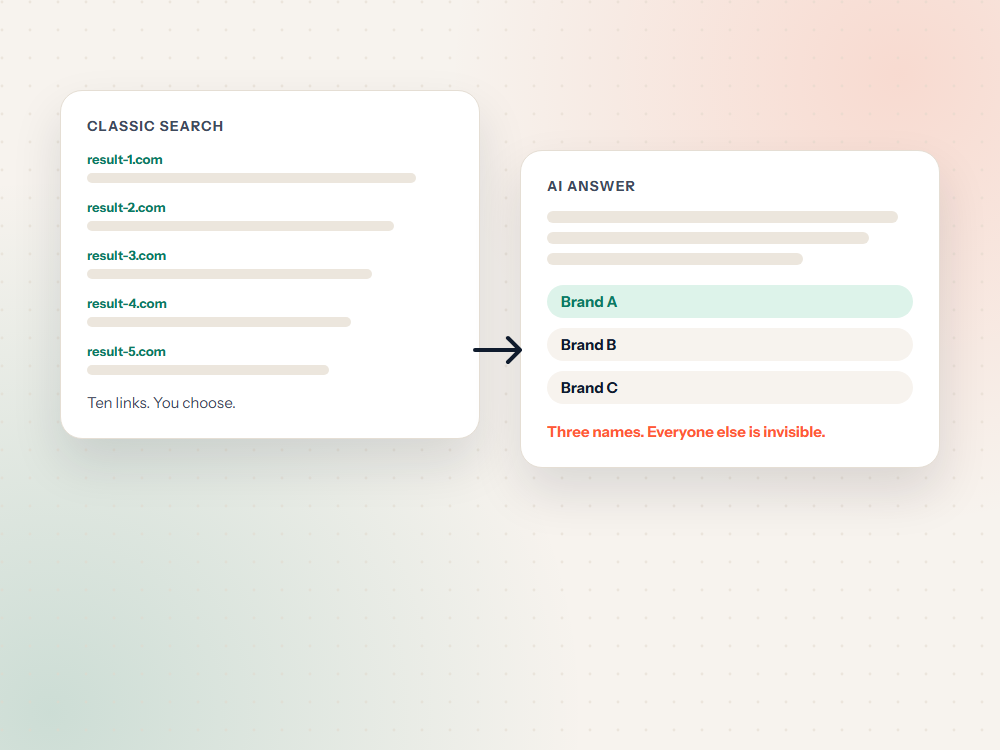
A buyer who asks an assistant which accountant to hire may never open a list of ten links. The assistant names a few options, and those few get the attention. That short list is the new shelf space, and most businesses are not on it yet.

AI systems choose sources they can retrieve, read and trust. Pages that answer one question clearly, state facts they can support and show who wrote them tend to be easier to cite. None of that is mysterious, but few websites were written with it in mind.

Google AI Overviews and Copilot draw heavily on pages that already perform in search, so a weak technical foundation holds back AI visibility too. We treat the two as one program with two audiences.

Our view: the brands that earn AI citations are often the ones that describe themselves most plainly, not the biggest ones. Plain language is an advantage that most sites waste.

What is included

What our AI SEO service covers

Six workstreams, prioritized from your audit. Most sites start with two or three of them.

Answer-first rewrites

Key pages get a direct answer near the top, followed by definitions and supporting detail, so crawlers and AI tools can pull the right passage.

Entity and brand consistency

Your business name, services, locations and leadership should read the same on your site, Google Business Profile, LinkedIn and industry directories.

Structured data

Organization, Service, FAQPage and Article markup that matches the visible page. We validate it and check it again after each release.

Citation-worthy content

Guides, glossaries and comparison pages that answer a question completely. Original data, when you have it, gives writers and AI tools something specific to reference.

Crawler access

Robots rules for GPTBot, OAI-SearchBot, PerplexityBot and Google-Extended, server-rendered content and clean sitemaps. We also add an llms.txt file, which is a proposed format with uneven support, so we treat it as optional.

Our process

How we run an AI SEO program

Step 1

Build the question map

We collect the questions your buyers ask, phrased the way people speak to assistants rather than how they type into a search box.

Step 2

Record a baseline

Each question is tested on the platforms your buyers use. We log which brands appear, which sources are cited and how the answers change.

Step 3

Fix and publish

Crawler access comes first, then rewrites of existing pages, then new content for the gaps the question map revealed.

Step 4

Retest on a schedule

AI answers vary from one session to the next, so a single screenshot proves little. We rerun the full question set every month and report the trend across many runs.

From the field

What we usually find when we audit AI visibility

Illustration of common SEO audit findings

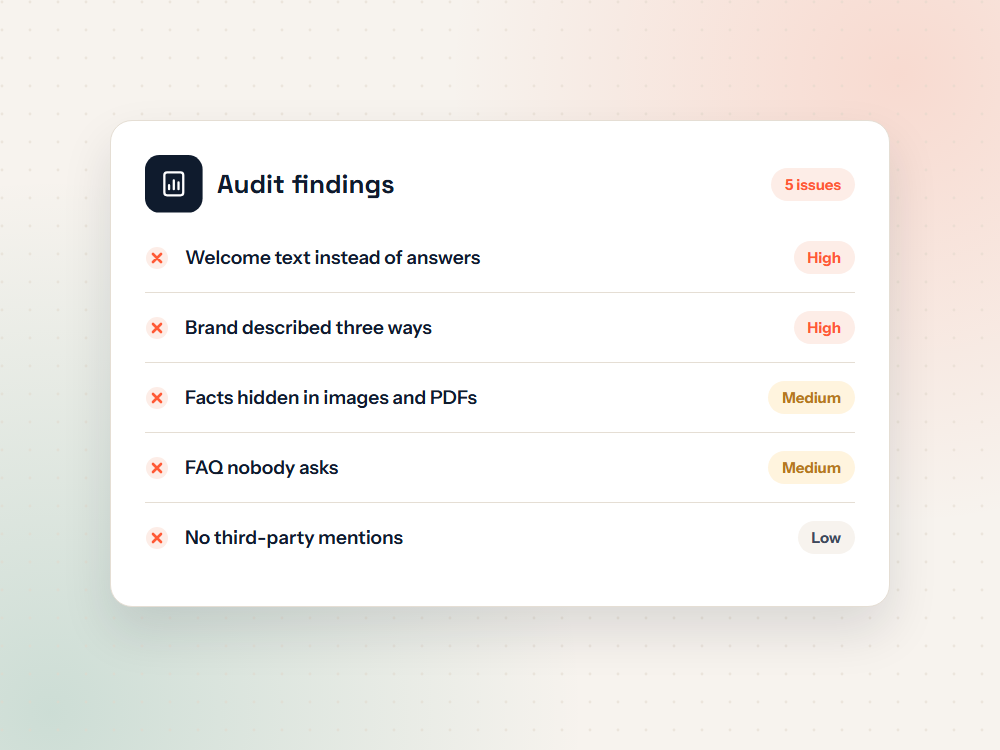
These problems come up often in AI visibility reviews:

  • Service pages open with a welcome message instead of a clear statement of what the service is and who it suits.
  • The business is described three different ways across its own website, LinkedIn and directories, so models are unsure what it does.
  • Key facts sit inside images, PDFs or scripted tabs that some crawlers do not render.
  • FAQ markup is present, but the questions are ones customers never ask.
  • The brand has no mentions on the sites its category trusts, such as trade publications and review platforms.

The first three are quick to fix. The last one takes longer and depends on earning real mentions, which is where digital PR earns its keep.

FAQ

AI SEO questions, answered

What is the difference between GEO, AEO and LLMO?

AEO formats content so a search or voice engine can extract a direct answer. GEO aims to earn citations in generative summaries such as Google AI Overviews. LLMO covers how language models describe your brand overall, which depends heavily on what other sites say about you. The three overlap, and the labels are not standardized across the industry.

Can anyone guarantee that ChatGPT will recommend my business?

No one can. AI answers are generated fresh, vary by wording and location, and the platforms do not publish a ranking system for them. What we can do is improve how often your pages qualify as sources and measure the result across a fixed question set.

How long does AI SEO take to show results?

Pages that already rank well can start appearing in AI answers after they are restructured and crawled again, often within weeks. Broad category questions usually take longer, because they depend on brand mentions building up across the web.

Do I still need traditional SEO?

Yes. Several AI search tools rely on the same index or on pages that rank in search. A site that crawlers cannot reach, or that Google does not trust, is unlikely to be cited, so we fix the search foundation first.

Is llms.txt required for AI visibility?

No. It is a proposed file that points language models to key pages, and support is still uneven. We add one where it makes sense, but crawler access, clear content and consistent brand mentions matter far more.

How do you measure AI SEO results?

We track mentions and citations across a fixed question set on the platforms your buyers use, referral traffic from AI tools in your analytics, branded search trends and any leads that say they found you through an assistant.

Client reviews

What our clients say

“Previously we had worked with some SEO companies who charged thousands of dollars but didn't deliver much. With Affordable SEO Plans the experience was entirely different since their prices were reasonable, the communication was excellent, and we began to see improvements in our Google rankings after a few months. I would strongly recommend them to any small business seeking affordable SEO services.”

“I was doubtful regarding affordable SEO since I thought that cheaper prices meant lower quality. I'm pleased that I decided to give them a try! Our website has now begun to rank for a greater number of relevant keywords, our organic traffic has increased, and we are receiving enquiries from customers who found us through Google. It has been a good investment for our business.”

“The thing I like best about Affordable SEO Plans is that they keep it simple: there's no confusing sales talk, no unnecessary services, just clear SEO work at a price which is reasonable. They have been responsive, transparent, and actually have been of genuine help in improving our online visibility. I wish that we had come across them earlier!”

Related services

Other ways we can help

Small Business SEO | Corporate & Enterprise SEO | SEO Consulting

See how AI assistants describe your business today

Send us the questions your customers ask most. We will check how the main assistants answer them, which sources they cite and where you are missing.

Get a free AI visibility check